Ray River Hot Spring: Finding Alaska's Most Remote Backcountry Soak
- September 2, 2026
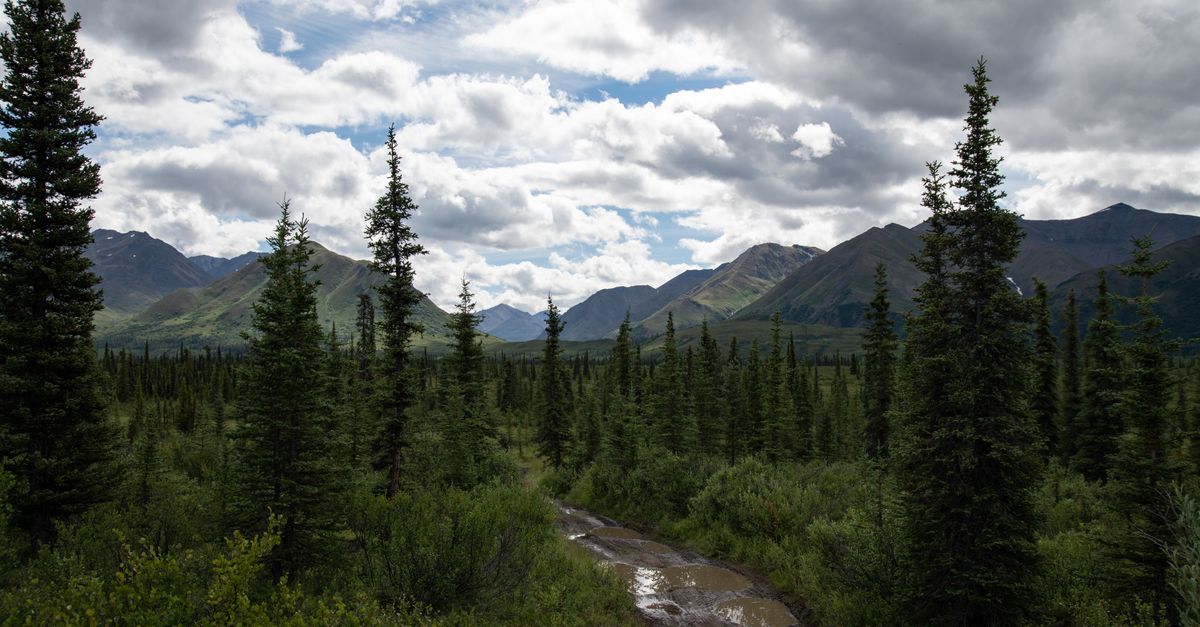
Photo by John De Leon via Pexels
Ray River Hot Spring sits at coordinates 65.9617 latitude and -150.9221 longitude, roughly 150 miles north of Fairbanks in one of the least populated regions in the United States. The Yukon-Koyukuk Census Area covers more than 74,000 square miles of Interior Alaska and contains fewer than 10,000 residents. Most of those people cluster in a handful of small communities along the Yukon River. Ray River Hot Spring itself lies nowhere near any of them.
The setting: Interior Alaska's last frontier
The landscape surrounding Ray River Hot Spring exemplifies the taiga and boreal forest transition that defines Interior Alaska. Black spruce and white spruce dominate the river corridors, their stunted forms shaped by permafrost and short growing seasons. Farther from the water, birch and aspen create a patchwork of vegetation that turns electric gold each September when autumn arrives in a rush of color before the long winter takeover.
The Ray River is a tributary of the Yukon River, one of North America's great waterways. It carves through glacial valleys deposited over millennia, creating the silts and gravels that form the riverbanks where geothermal water naturally surfaces. The hot water emerges where groundwater, heated by deep geologic processes, rises along fault lines and mixes with cold river water to create pools accessible to determined soakers.
This region experiences temperature extremes that define Interior Alaska's continental climate. Summer temperatures occasionally reach the 80s Fahrenheit, but winter temperatures routinely plunge to 40 below zero and colder. The hot spring itself provides year-round access in a way that most backcountry destinations cannot. Geothermal heat keeps the water flowing regardless of what the air temperature does above it.
The experience: Solitude at the edge of the world
Reaching Ray River Hot Spring requires a substantial commitment of time and effort, and that isolation is part of the appeal. There is no developed trail leading to the springs, no sign marking the route, no fee station collecting money at the trailhead. What exists is wilderness, and the reward for navigating it is the rare privilege of soaking in complete solitude at one of the most remote documented hot springs in the United States.
The pools form naturally where geothermal discharge meets the river, creating a thermal gradient that soakers must navigate to find comfortable temperatures. The USGS has catalogued this spring as a recognized thermal feature, meaning it appears on federal geological surveys and has documented flow characteristics, though specific temperature readings are not consistently recorded. Visitors should expect to assess conditions on arrival and adjust their soaking strategy accordingly.
The river setting creates a distinctive atmosphere compared to developed hot springs or thermal pools tucked away in mountain valleys. Water sounds provide constant white noise, the river current visible and audible from the pools. The forest presses close on both banks, and in the long Interior Alaska summer nights, the sky barely darkens before dawn begins pushing back the stars.
Wildlife presence reflects the region's health. Moose move through the willow flats adjacent to the river. Black bears forage for salmon when the runs are strong. Wolves and lynx patrol the uplands. Bald eagles perch in the spruce tops. The presence of humans is rare enough that wildlife has not learned to associate the hot spring area with danger, which means careful food storage and respectful distance remain essential practices.
Getting there: The logistics of remote soaking
No road leads to Ray River Hot Spring. Access requires either a floatplane landing on the river or an extended overland journey from the nearest road system, which itself lies many miles south. Most visitors approach by air from Fairbanks, the regional hub for Interior Alaska aviation. Charter flights can deliver passengers to a gravel bar or riverbank suitable for landing, though weather frequently grounds aircraft for days at a time in this part of Alaska.
Those choosing to hike face a substantial journey through roadless terrain. From the end of the Elliot Highway or the Dalton Highway corridor, cross-country travel through taiga forest and river valleys requires navigation skills, wilderness experience, and the ability to handle the psychological and physical demands of extended backcountry travel. The absence of trails means there is no obvious route to follow, only terrain to cross.
Supplies must be carried in for the entire duration of the visit. There are no resupply points, no emergency services, no cell phone coverage. A typical visit involves packing in all water, food, shelter, and gear while packing out everything brought in. This weight burden shapes the logistics of the trip and limits the duration most visitors can reasonably manage.
Planning your visit: What to know before you go
The year-round accessibility of Ray River Hot Spring comes with important caveats about winter travel in Interior Alaska. While the water remains liquid regardless of air temperature, reaching the spring through snow and frozen terrain demands different skills and equipment than summer approaches. Snowmachine or ski travel becomes necessary when snowpack covers the ground, adding complexity to navigation and self-rescue capability requirements.
Summer visits avoid extreme cold but introduce a different set of challenges. Mosquito and black fly populations during the brief Interior Alaska summer can be intense, requiring head nets and effective repellent. River crossings present hazards during high-water events, and the absence of any infrastructure means a sprained ankle or equipment failure becomes a serious situation rather than an inconvenient delay.
Gear priorities for a Ray River Hot Spring visit include reliable navigation equipment since no trail exists, water purification methods since the hot spring water itself requires testing before consumption, emergency shelter and signaling capability, and enough extra days of food to account for weather delays that commonly extend backcountry trips in Interior Alaska. The nearest medical facility lies hours away by air, making comprehensive first aid skills and supplies essential.
The raw appeal of backcountry soaking
Ray River Hot Spring represents a category of hot spring experience that is becoming increasingly rare in North America: the genuinely remote, completely undeveloped thermal soak accessible only to those willing to invest substantial effort in reaching it. In an era when even wilderness experiences are increasingly commodified and accessible, the continued absence of development at Ray River Hot Spring represents a choice maintained by land management agencies and the visiting public to preserve something wild and unmediated.
The spring offers no hot tub jets, no changing rooms, no admission desk, no interpretive signage explaining the geology, no paved path to the water's edge. What it offers instead is something harder to quantify: the knowledge that the water you are soaking in has never been engineered, never been formalized, never been transformed from a natural occurrence into a recreational product. It remains what it is, a place where geothermal energy meets river water in the heart of one of North America's most sparsely populated landscapes.
That authenticity draws a specific kind of visitor, one willing to accept the costs and challenges of remote travel in exchange for an experience that cannot be replicated in a developed setting. For those who make the journey, the reward is simple and singular: soaking in hot water at the edge of a wild river, under a sky where stars emerge without competition from artificial light, in a silence broken only by the sound of flowing water and the distant call of a river bird.
Ray River Hot Spring does not make the journey easy. It offers something better: the opportunity to experience a hot spring exactly as it exists in nature, shaped only by geology and time, unchanged by human hands.