Trocadero Soda Springs: Alaska's Most Remote Wilderness Soak
- September 9, 2026
Trocadero Soda Springs sits at coordinates 55.3383 latitude and -132.9918 longitude. There is no fee to visit, no developed infrastructure, and no guarantees of solitude other than the sheer difficulty of reaching this place. Those who make the journey discover a soda spring that emerges directly along the coastline of Prince of Wales Island, one of the largest islands in the Alexander Archipelago of Southeast Alaska. The spring bubbles up through gravel and sand where saltwater meets freshwater, creating a mineral composition shaped by both deep earth geology and the tidal influences of the Pacific.
Prince of Wales Island sprawls across approximately 2,577 square miles, making it larger than the entire state of Rhode Island yet inhabited by fewer than 6,000 people. The island's eastern coast faces the Gulf of Esquibel and the open Pacific, a stretch of shoreline where weather systems roll in unimpeded from hundreds of miles of open ocean. Trocadero lies along this wild stretch, within the boundaries of the Tongass National Forest, the largest national forest in the United States and a landscape of old-growth western hemlock and Sitka spruce, granite shorelines, and an almost constant shroud of mist.
The Tongass covers most of Southeast Alaska's landmass, one of the largest temperate rainforests remaining on Earth. This is not the forests of the Rocky Mountains or the Sierra Nevada. The Tongass receives between 60 and 160 inches of precipitation annually depending on elevation and exposure, creating an ecosystem of extraordinary density and biodiversity. Western red cedar, yellow cedar, and Sitka spruce reach massive sizes in the valleys and coastal areas, their root systems anchored in soils that have been accumulating organic matter for thousands of years. Salmon runs pulse through the island's streams during summer months, feeding everything from bald eagles to black bears to the indigenous communities who have stewarded this land for millennia.
Reaching Trocadero Soda Springs requires a boat. This is not a drive-to destination or a trailhead you can hike to after parking at a maintained lot. The spring sits too far from any road for practical access on foot, and the terrain between the island's limited road network and the coast consists of dense, trackless forest that makes overland travel extraordinarily slow and difficult. Most visitors arrive by skiff or larger vessel, timing their approach around tidal conditions and weather windows. The coast here offers no protected harbor at the spring itself, meaning arrivals and departures depend on reading the water and the sky with confidence.
The soaking experience at Trocadero is defined by its ruggedness and lack of development. Unlike the converted pools at commercial or highly developed public hot springs, Trocadero offers a genuinely primitive encounter with geothermal activity. The spring's mineral content creates that distinctive soda quality, with dissolved carbon dioxide giving the water a slight effervescence that distinguishes it from the thermal pools found elsewhere in Alaska's Interior or along the Ring of Fire. The water temperature varies depending on the mixing ratio with cold groundwater and tidal seawater, never achieving the consistent warmth of a well-bottled hot spring. Soakers must be prepared to wade into water that may be cooler than expected, particularly during winter months or at high tides when more seawater infiltrates the spring.
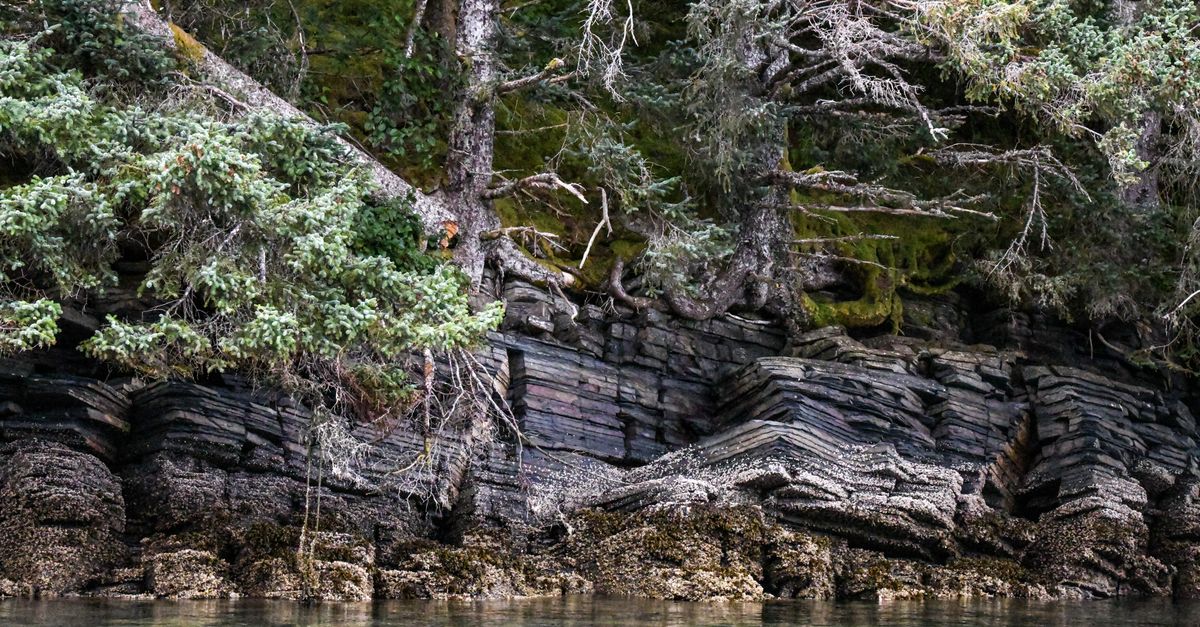
The setting amplifies everything. Soaking at Trocadero means sitting in warm or lukewarm mineral water while gazing out at the gray-green expanse of the Pacific. Fog banks drift past. Sitka spruce crowd the shoreline, their branches heavy with lichen and epiphytes that speak to the relentless moisture of this climate. The silence, when the wind dies, is the profound silence of wilderness. Nothing mechanical, nothing electronic, no traffic or human settlement. Just the soft lap of waves, the cry of a heron, perhaps the splash of a harbor seal curious about the intruders in their tidal pool.
Planning a trip to Trocadero Soda Springs demands respect for the fundamentals of wilderness travel in remote Alaska. There is no cell service in this area, no rescue infrastructure, and no staffed facilities of any kind. Visitors must carry everything they need including water, food, appropriate clothing for Southeast Alaska's notoriously changeable weather, and emergency communication equipment such as a satellite messenger or personal locator beacon. The boat trip from the nearest launch point or community may take an hour or more depending on conditions, and weather windows can close without warning, potentially stranding visitors for days until conditions permit safe departure.
Summer months from May through September offer the most reliable weather windows and longest daylight hours, though mosquitoes and black flies can be aggressive during peak insect season in June and July. Many experienced Alaska travelers prefer the shoulder seasons of late April through early May or September through October, when insect pressure diminishes and the landscape takes on the particular beauty of autumn in a temperate rainforest. Winter visits are entirely possible given the year-round access this location permits, but they require serious cold-weather preparation and acceptance of the minimal daylight hours and storm systems that characterize Southeast Alaska winters.
The fact that Trocadero Soda Springs remains undeveloped reflects both its remote location and the culture of public land management in the Tongass National Forest. Alaska's national forests operate under a multiple-use mandate that preserves wilderness character while permitting hunting, fishing, trapping, and dispersed recreation. The absence of development here is not an oversight but a choice embedded in how this landscape has been managed. Visitors who arrive find a spring that looks much as it did a century ago, fed by the same geological forces, surrounded by the same forest, subject to the same tides and storms.
For those willing to prepare, to wait out weather and water, to sit in lukewarm mineral water on a fog-shrouded coast and find that enough, Trocadero offers one of the most honest soaking experiences Alaska has to share.